

Thank you Artisans for supporting our nonprofit work here at the Kearsarge Food Hub!
An article from Sweet Beet Market + Cafe sponsor Artisans New London by Marcy Vierzen
Sometimes a small idea becomes the spark for something much bigger. When members of our nonprofit Ampli5E began building a Tiny House on Wheels in a New London driveway in the summer of 2025, none of us could have predicted what that experience would grow into. What began as a hands-on experiment—shaped by problem-solving, creativity, mentoring from incredibly skilled community members, and more learning curves than we ever imagined—quickly became something deeper.
As the build unfolded, our entire Ampli5E team—Annie Carr (Sutton), Jennifer Giles (New London), Andrea Crainich (Bradford), Mfon Etukeren (Houston), and the core crew leading the construction effort—kept returning to the same question:
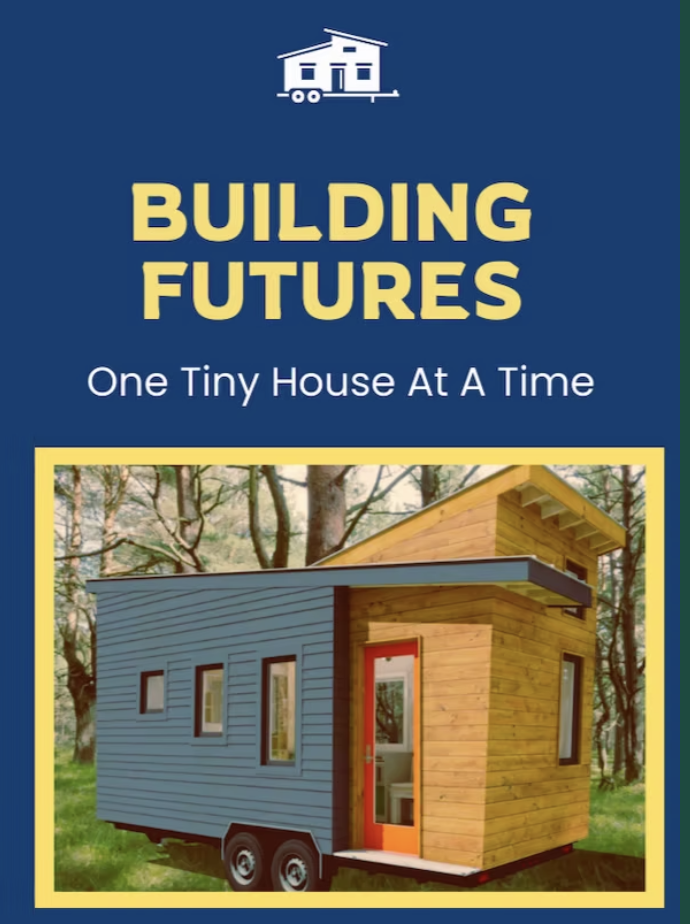
Tiny House building project at the Kearsarge Regional High School
What if students could learn everything we were learning, but earlier—with guidance, teamwork, and community support?
That question led us to the Extended Learning Program at Kearsarge Regional High School, where the remarkable Rebecca Hemingway and Colleen McIntyre helped us bring a new idea to life: a full-year design course on building a Tiny House on Wheels, with next year dedicated to constructing the house on campus with shop teacher Jesse Fenn.
Our goal is simple but powerful:
To give students hands-on experience in design, architecture, budgeting, building, problem-solving, collaboration, and community engagement—skills they will carry throughout their lives.
This fall, we’ve had the privilege of welcoming exceptional local professionals who have generously shared their expertise with the class.
Our first speaker, Amanda Raymond of Studio Sage Interiors, is a New Hampshire–based designer known for creating interiors that feel both personal and timeless. Her work has been featured in NH Home Magazine, Trend Watch, and Architectural Digest, and she brings a deep connection to the Kearsarge–Lake Sunapee region where she grew up. Amanda taught students how to create design concept statements and bubble diagrams, helping them dive into the feeling, flow, and function of a small space. Her session helped shape the emotional and aesthetic foundation of the project.
Next, architect Frank Anzalone of Frank Anzalone Associates brought students into the structural side of design. He explored the decisions behind small-space architecture: how a door should swing, where outlets should go, how natural light moves through a space, and how to make every inch count. Frank’s calm, clear explanations gave students a new language for understanding how design becomes structure.
Then we welcomed builder Jay Tucker of Old Hampshire Designs, renowned for his post-and-beam and hybrid homes across New England. Jay walked students through the realities of turning concepts into a buildable plan—especially the balance between dreams and budgets. He shared a full build spreadsheet and talked candidly about materials, costs, labor, and the financial decisions behind construction.
During our most recent class, we shifted from inspiration to application. Students began creating their own floor plans using graph paper, working within an 8' x 24' tiny house footprint. But before they put pencil to paper, we did something essential: we taped out the entire 8' x 24' footprint on the classroom floor.
Students stepped inside the outline, walked it end to end, stood shoulder-to-shoulder, imagined a kitchen here and a bathroom there, and experienced what it felt like to inhabit a tiny home. They considered the position of wheel wells for the double-axle trailer, thought about loft heights, and made discoveries only possible by physically standing inside the space.
Then, with new spatial awareness, they returned to their graph paper to fit the essential elements they had identified—sleeping space, kitchen function, bathroom layout, and multi-use living areas—into their early designs.
Watching the students bend over graph paper, revise layouts, pace inside the taped footprint, and reimagine possibilities was incredibly moving. It was the moment when design, structure, budget, creativity, and real-world constraints finally met.
This tiny house is more than a build.
It is a lesson in creativity, resilience, planning, teamwork, and the beauty of learning from the community around you.
And this is only the beginning.