We invite you to watch the Farm Bill Chat hosted by the Dartmouth’s Center for Advancing Rural Health Equity (CARHE), NH Hunger Solutions, NOFA-NH, and us here at the Kearsarge Food Hub. Then take action for the Farm Bill we need and we deserve.
During the chat, we discussed the origins of the bill, all the various policies held within this five-year legislation, and how it impacts our communities in two main buckets: organic farming and food assistance programs.
As discussed in the chat, the Farm Bill drafts that are moving through congress falls short in meeting climate change head on, reversing or delaying cuts to food assistance programs, and generally moving our community toward a resilient food system that truly nourishes people and planet.
We also discuss how the Farm Bill is passed, which is a process that is currently underway.
With two proposed drafts by the house and senate agriculture committees in process to be finalized and voted on in the coming weeks (no official date set yet), we have the opportunity to advocate for an equitable and actionable bill that meets the needs of our farmers, food systems, and communities today and into the future.
Watch the chat and find advocacy resources below!
Support the systemic shift toward local, diversified organic food systems and nutrition security for all. Here are just a few focal points:
Advocate for specialized insurance and grant structures that fit small, diversified Northeast farms.
Prevent budget cuts or stricter work requirements that would strip food security from local families through cuts to SNAP/ WIC
Secure federal funding for USDA programs like EQIP (Environmental Quality Incentives Program) that help small farms build soil resilience.
Protect and fund the Farm Bill's "Beginning Farmer and Rancher" programs and easements that keep farmland affordable.
Take Action
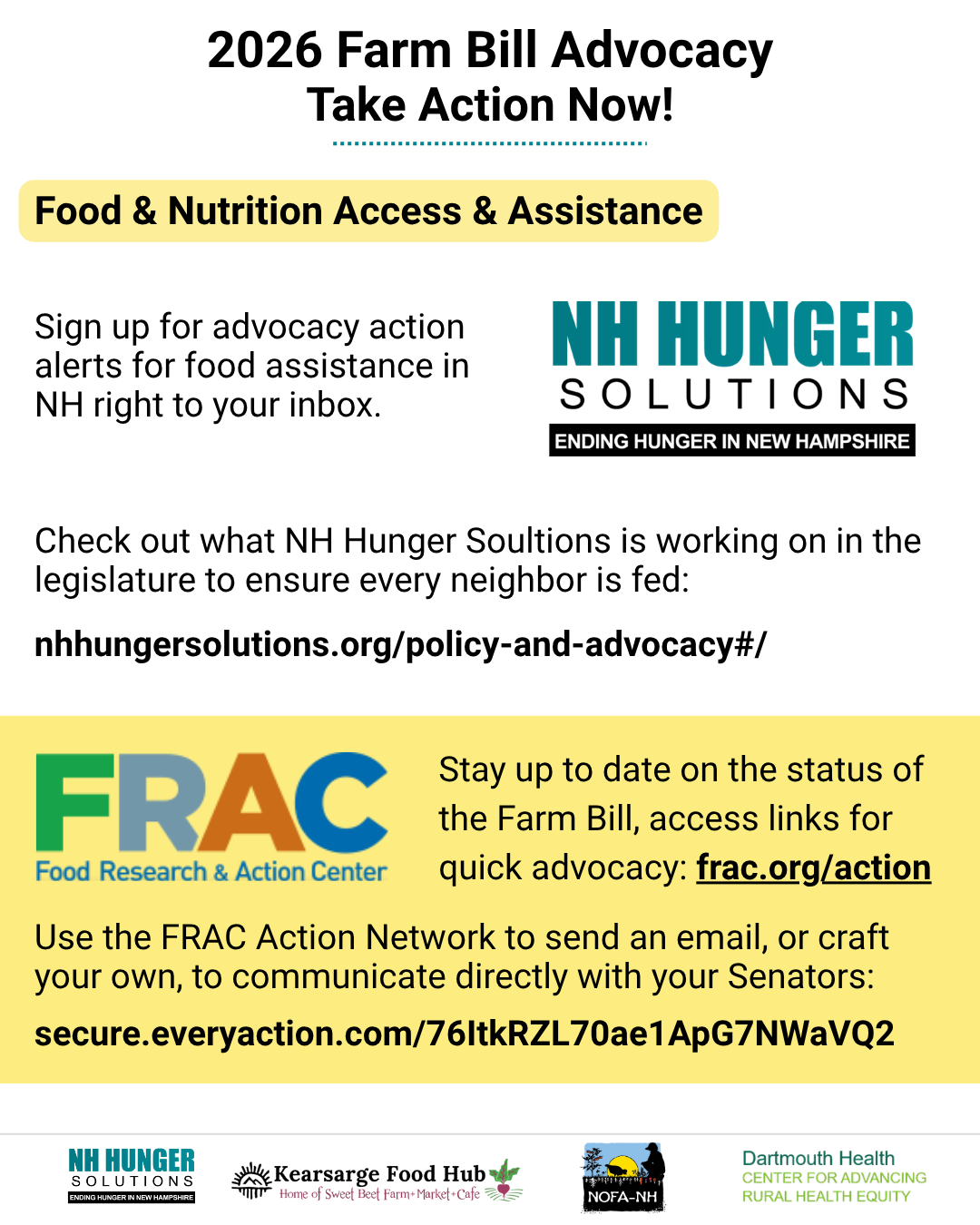
NH Hunger Solutions: Sign up for advocacy action alerts for food assistance right to your inbox. Check out what NH Hunger Solutions is working on in the legislature to ensure every neighbor is fed: nhhungersolutions.org/policy-and-advocacy#/
Food Research and Action Center: Stay up to date on the status of the Farm Bill, access links for quick advocacy visit frac.org/action. Use the FRAC Action Network to send an email, or craft your own, to communicate directly with your Senators. For an easy-to-use form visit: secure.everyaction.com/76ItkRZL70ae1ApG7NWaVQ2
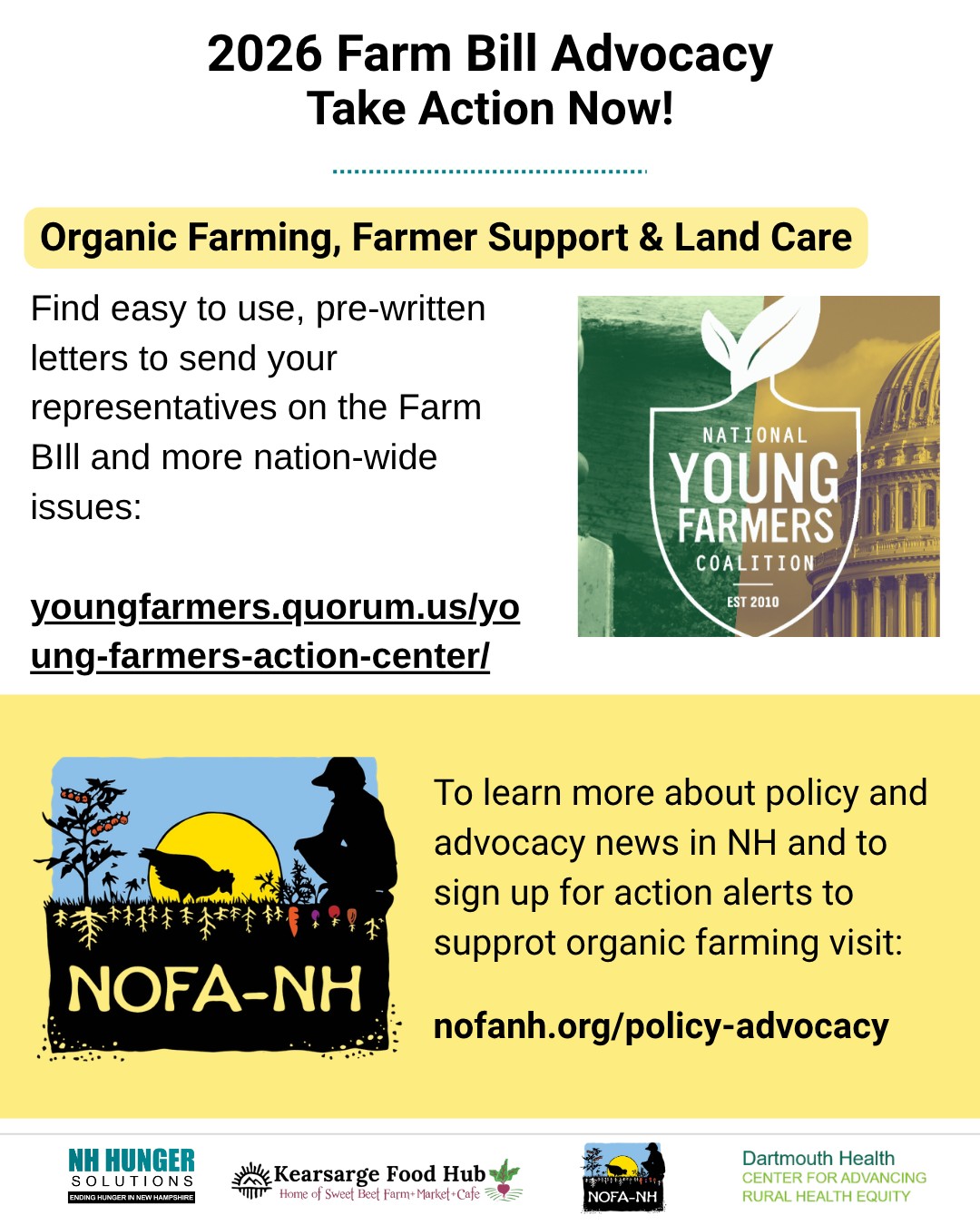
National Young Farmers Coalition: Find easy to use, pre-written letters to send your representatives on the Farm Bill and more visit youngfarmers.quorum.us/young-farmers-action-center/
NOFA-NH: To learn more about policy and advocacy news and to sign up for action alerts to support organic farming, visit nofanh.org/policy-advocacy